Balancing Innovation and Client Needs: A Practical Guide for Software Product Delivery
Discover strategies for product leaders and engineers to balance innovation with client-driven software delivery, ensuring growth without compromising core vision.


The Dual Mandate: Innovation vs. Client-Driven Delivery
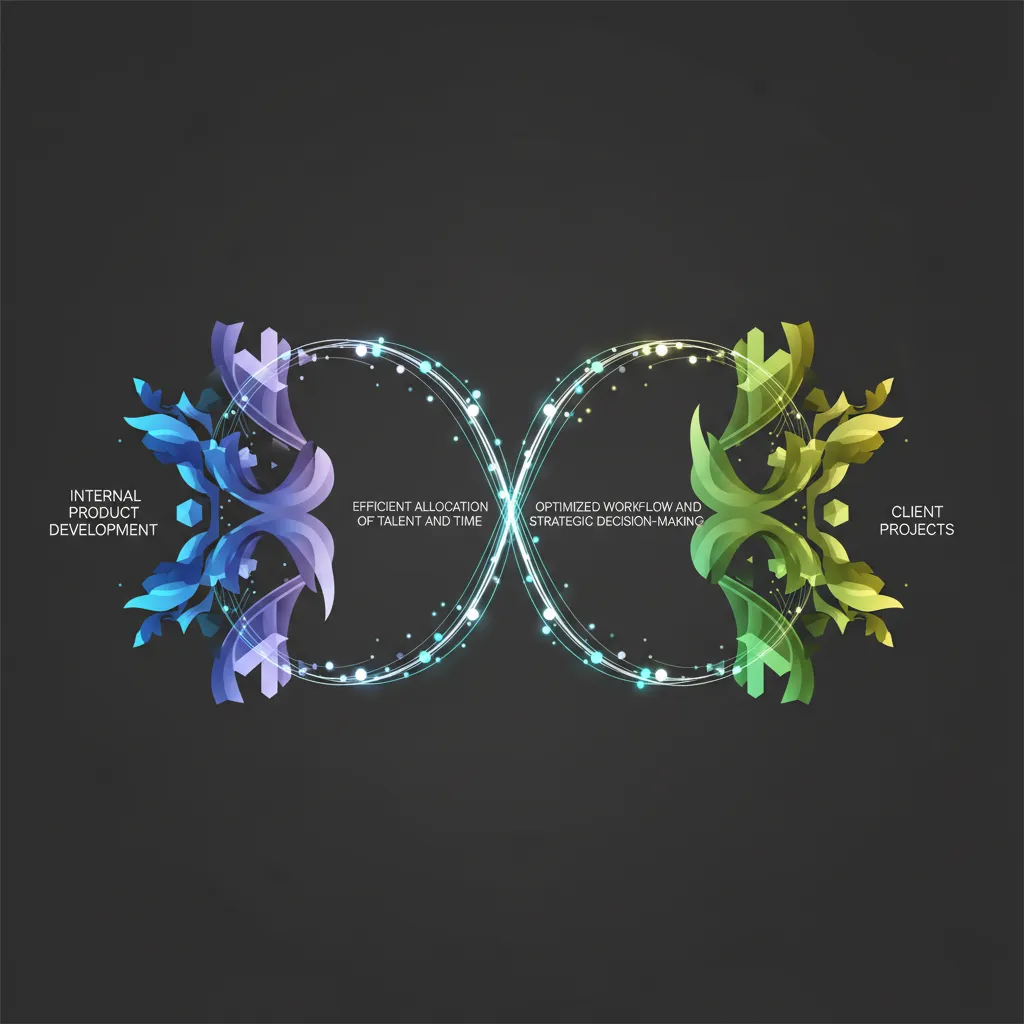
In the dynamic landscape of software product development, organizations constantly navigate a fundamental tension: the push for groundbreaking innovation and the imperative to meet specific client demands. Both are critical for sustained growth and market relevance, yet their often-conflicting priorities can lead to resource contention, technical debt, and diluted product vision if not managed strategically.
This challenge is particularly acute for founders, CTOs, product leaders, and engineers who are responsible for both charting the future of a product and ensuring its immediate utility for paying customers. Striking the right balance isn't about choosing one over the other, but rather about establishing frameworks that allow both to thrive.
Understanding the Core Tension
Innovation often requires speculative investment, long lead times, and the freedom to experiment. It's about exploring new problem spaces, developing novel solutions, and potentially pivoting based on market feedback. Client-driven delivery, conversely, is typically characterized by clear requirements, fixed timelines, and a direct impact on revenue and customer satisfaction. The tension arises when:
- Resource Allocation: Innovation projects can feel like a "cost center" compared to directly revenue-generating client work.
- Prioritization: Urgent client requests can derail planned innovation efforts.
- Technical Debt: Rushed client features might introduce shortcuts that hinder future innovation.
- Product Vision Dilution: Too many client-specific features can lead to a fragmented product that lacks a cohesive direction.
Strategies for Harmonious Coexistence
Achieving equilibrium requires intentional strategies and a disciplined approach to product management and engineering.
Dedicated Innovation Sprints and Time Blocks
Allocate specific, protected time for innovation. This can manifest as:
- Innovation Sprints: Regular, short sprints (e.g., one sprint every quarter) dedicated solely to R&D, exploration, and prototyping without immediate client deliverable pressure.
- "20% Time" or "Innovation Days": Empower engineers to spend a percentage of their work week or dedicated days exploring new technologies, refactoring, or working on passion projects that align with product goals. This fosters a culture of continuous improvement and ownership.
Strategic Client Engagement
Not all client requests are created equal. Implement a robust framework for evaluating and integrating client feedback:
- Weighted Prioritization: Use metrics beyond immediate revenue, such as strategic alignment, market impact, scalability, and technical feasibility, when evaluating client features.
- Product Council: Establish a forum where key client representatives and internal product leaders collaboratively review roadmap items. This ensures client needs are heard within the context of the broader product vision.
- Pilot Programs & Early Access: Engage key clients in pilot programs for innovative features. This allows for real-world testing and feedback, turning innovation into a shared journey rather than a solely internal endeavor.
Modular Architecture and Feature Flags
Engineering practices play a crucial role in enabling flexibility:
- Modular Design: Architect systems with clear boundaries and interfaces. This reduces the risk of client-specific customizations entangling core product logic and makes it easier to iterate on independent modules.
- Feature Flags (Toggles): Deploy features to production but keep them hidden behind flags. This allows for gradual rollout to specific clients or internal teams, testing in a live environment, and quick rollback if issues arise, without impacting the broader user base. It decouples deployment from release.
The "Two-Way Door" Decision Framework
Distinguish between reversible (two-way door) and irreversible (one-way door) decisions. Most client-driven features are two-way door decisions – if they don't work, they can be removed or adjusted. Innovation, especially foundational changes, can sometimes be one-way door decisions. Understand the implications and risk tolerance for each.
Measuring Success Beyond Velocity
Traditional metrics like feature velocity often favor client-driven delivery. To balance, expand your definition of success:
- Innovation Metrics: Track concepts prototyped, patents filed, technical debt reduced, or new market segments explored.
- Customer Lifetime Value (CLTV): Instead of just immediate client satisfaction, focus on how innovative features contribute to long-term customer retention and expansion.
- Team Morale & Engagement: A balanced approach often leads to higher engineer satisfaction and reduced burnout.
Common Pitfalls to Avoid
- "Yes-Man" Syndrome: Agreeing to every client request without assessing its broader impact on the product vision or technical health.
- Innovation in a Vacuum: Developing features without sufficient market research or validation, leading to irrelevant innovations.
- Neglecting Technical Debt: Postponing essential refactoring and architectural improvements in favor of immediate feature delivery, which cripples future innovation.
- Lack of Communication: Failing to transparently communicate the product roadmap and prioritization rationale to both internal teams and key clients.
FAQ
How can we ensure client-driven features don't completely dominate the roadmap?
Implement a structured prioritization framework that includes strategic value, market fit, technical feasibility, and alignment with core product vision, alongside client demand. Dedicated innovation time slots in the roadmap also create protected space.
What's a good starting point for a small team trying to balance these?
Begin with small, regular innovation spikes – perhaps one day every two weeks or a dedicated half-day. Also, be highly selective with client requests, ensuring they provide broad value or open doors to new opportunities, rather than being one-off customizations.
How do you communicate 'no' to a valuable client when a feature request doesn't align?
Frame it constructively. Explain why it doesn't align with the product's strategic direction or broader benefit to the customer base. Offer alternatives, explore if the underlying problem can be solved differently with existing features, or suggest it as a potential future consideration if market demand shifts. Transparency and a clear product vision are key.
Is it always necessary to separate innovation and client work?
Not strictly. The goal is balance. Sometimes, a client's specific problem can inspire a broader innovative solution. The key is to avoid reactively building client-specific solutions without considering their broader architectural implications or alignment with the product's long-term vision. Dedicated time ensures proactive innovation isn't always pushed aside.